Показаны сообщения с ярлыком Muscle Building. Показать все сообщения

пятница, 15 декабря 2017 г.

You Probably Didn't Know These 25 Foods Help Build Muscle

You Probably Didn't Know These 25 Foods Help Build Muscle

Building muscle happens when you find the balance between strategic strength training and an eating plan (that should include proper protein and healthy carbohydrates while limiting refined sugars, processed food, and artificial ingredients). However, that doesn’t mean you have to settle for the same salmon and kale for lunch and a dry chicken breast for dinner! Here's a compilation of 25 muscle building foods that can add variety to your diet and help you sculpt those muscles into flex-worthy shape.


1. Oysters: Another seafood pick that offers the mineral zinc, oysters are rich in protein and help replenish muscles broken down from training.


2. Vinegar: Not only a nice pairing with your olive oil for salads, but when paired with carbohydrates, it acts as an agent to cause those carbs to be stored as muscle glycogen, rather than stored fat.


3. Green tea: Green tea is a wonderful antioxidant and diuretic that has also been linked to fat loss and improved blood circulation. A perfect substitute for coffee when in muscle mode! If you haven't tried our Detox Green Tea you are seriously missing out. Give it a go already!


4. Eggs: A whole egg is a perfect pick for a protein punch. And don’t get rid of the yolk! When trying to build muscle, the yolk contains beneficial nutrients worthy of consumption. We're currently salivating over these 11 incredible egg recipes.


Skinny Mom Easy Hard Boiled Eggs recipe

>> VIDEO: How To Hard-Boil An Egg


5. Broccoli: Not only is broccoli low in calories and filling, it also contains a significant amount of soluble fiber, which aids in fat loss. Who doesn't love a fat loss bonus?!


6. Chocolate milk: Another option containing the slow-digesting protein, casein, chocolate milk has been touted as not only a great post-workout recovery drink, but a good source of necessary carbs.


7. Almonds: These nuts stack up high when it comes to fiber and protein in comparison to most nut options. They also contain vitamin B, a vitamin linked to energize metabolism. Try Skinny Mom's yummy Fruit and Almond Trail Mix, which is kid-tested and mommy-approved.


8. Raspberries: Raspberries contain the most fiber of all berries. A fiber-filled diet is imperative for proper digestion and muscle sculpting. The antioxidants can also help regulate metabolic rates and insulin sensitivity.


bowl of fresh raspberries

9. Avocados: Packed with monounsaturated fat, the “good” fat, avocados can help eliminate weight from the midsection while containing a host of 20 different essential nutrients.


10. Quinoa: An option over grains that is high in amino acids, which sets it apart from most carbohydrates in your diet. Team Skinny Mom is quinoa-obsessed. Try our Quinoa Mexi-Lime recipe!


11. Apples: Offering electrolytes, carbs and fiber, apples are a great post-workout snack and option for adding muscle mass to your physique.


12. Spinach: Not only known as a superfood, the calcium in spinach can help to relax muscles and prevent cramping during muscle training intervals.


fresh straberry spinach salad

13. Mussels: Just say yes to seafood, and especially these muscle-building mussels. High in protein and low in fat, mussels also contain B12, which is essential for active individuals.


14. Extra virgin olive oil: Another source of monounsaturated “good” fat, extra virgin olive oil is a great enhancement to your salads and vegetable servings when in muscle-building mode.


15. Oats: Oats are high in fiber, yet offer low sugar and carbohydrate options needed for lasting energy when muscle training. Look for whole rolled oats and avoid processed options. We love starting the day with Slow Cooker Oats topped with blueberries. NOM.


slow cooker oats with blueberries

16. Turkey: Turkey weighs in as one of the leanest meat options available. Packed with protein, turkey paired with vegetables can make for a hearty and muscle-friendly meal.


17. Carrots: Not only a source of vitamins, carrots are also rich in fiber and low in calories. They make an easy grab-and-go snack raw or can be cooked as a side dish with meals.


18. Cottage cheese: Also containing casein, cottage cheese additionally contains an average of 28 grams of protein in one cup! Choosing a low-fat cottage cheese is a great option provided it has not been supplemented with extra sugar or sodium.


19. Lentils: A perfect side dish with lean meats or vegetables, lentils offer fiber, protein, and slow-digesting carbohydrates most desirable when training to strengthen muscles.


20. Beets: Packed with natural nitrates, beets stand up to improve lasting performance when it comes to vasodilatation, or widening of blood vessels, which inhibits muscle growth.


pile of fresh beets

21. Black beans: Don’t save these gems for taco night. Eating black beans provides you with vitamins B, K, C, and A, which are low in saturated fats. It’s a high protein and fiber food that is low in calories. Yes, please!


22. Salmon: One of these best sources of omega-3 fatty acids, salmon cannot be left off of any list for those who want to improve their physique. Look for wild salmon over farm-raised, which can be raised on corn and grain feed. From salmon burgers to salmon sushi bowls, we've got you covered in the superfood salmon department.


Salmon Sushi Bowls for Two

23. Venison: It may not be a meat that you come across often, but when you do, take advantage! Venison is high in iron and low in saturated fat and an excellent source of protein that packs flavor and nutrition.


24. Brown rice: A staple on most body builder diets, brown rice offers complex carbohydrates which lead to lasting energy for athletes. Look for whole grain options when shopping for this staple.


25. Greek yogurt: With more than twice the protein of regular yogurt, Greek yogurt is a great source to turn to when focused on muscle enhancement. Just be careful to avoid Greek yogurt with artificial colors, added sugars, and artificial ingredients. Greek yogurt also contains casein, a slow digesting milk protein to help keep you feeling full longer.


Don't let your meals become boring — add some of these foods for a good variety and watch those muscles grow!


Superfoods_Detox_Soup-RESIZED-8-650x430

Original article and pictures take asset.popculture.com site

среда, 13 декабря 2017 г.

Yoga Morning Routine Workout (Download PDF)

Yoga Morning Routine Workout (Download PDF)
Yoga Morning Sequence

Yoga Morning Routine Workout


An energizing morning yoga practice can work as a natural stimulant to set you up for a productive day.


While an hour-long yoga class would be ideal to get the day started, unfortunately sometimes we don’t have the time. This short yoga morning routine encourages the use of breathing and gentle movement. Practice a few minutes a day and reap the full benefits.


Fitness Training Resources


Complete List Of Our Best Home Based Printable Workout Routines


Scroll Below To See Full Instructions Along With Our Printable PDF For The Yoga Morning Routine Workout


1) 8 yoga exercises


2) Instructions on how to perform each exercise


3) Infographic with visual instructions to follow online


4) Print PDF available at the end of the infographic


CHILD POSE


WIDE LEG CHILD POSE


DOWNWARD POSE


UPWARD POSE


LOW LUNGE


LUNGE TWIST


CHEST TO THIGH


LOTUS POSE


How To Do A Child Pose


1) On a mat start in a kneeling position with your thighs touching.


2) Drop your butt toward your heels and stretch your body forward with your stomach comfortably on top of your thighs.


3) In a fully stretched position rest your arms in a relaxed position in front of you on the floor and rest your forehead on the mat. You should feel a stretch in your shoulders, buttocks, spine and arms.


How To Do A Wide Leg Child Pose


Repeat child pose with the exception of placing your legs wide apart as noted in the image above.


How To Do A Downward Pose


1) Start in a standing position.


2) Place your hands in a prayer position.


3) Inhale and raise your hands up fully extend from the side and finger tips touch at the top.


4) Exhale and hinge into standing forward bend with palms touching the mat.


5) Inhale and extend your spine into standing half forward bend with fingers touching the top of your feet.


6) Exhale and step or jump back to plank pose.


7) Exhale and push your hips toward the sky as you step each foot back until your body exhibits a downward dog in the shape of an inverted “V”. Keep palms flat on mat.


8) To exit pose, move your feet forward into standing forward bend with palms touching the mat.


How To Do A Upward Pose


1) Lie flat on your belly.


2) Bend your arms and rest your palms on the floor on either side of your chest.


3) Inhale and squeeze your shoulders up to your ears.


4) Exhale and press your hands down while straightening your arms, bringing your torso and legs up off the floor as if you were doing a half push-up.


5) Slide your hands against the floor closer towards your feet while keeping your hips high.


6) Lengthen the sides of your body and keep your neck long.


How To Do A Low Lunge


1) From a downward dog pose, exhale and step your right foot forward between your hands, aligning right knee over the heel.


2) Keep your right leg in this position, bring your lower knee towards the floor.


3) Slide the left leg back until you feel the muscles stretching in your groin and as well as in the front of your left thigh.


4) The front part of your left foot should be turned to the floor.


5) Now inhale while lifting your body and making it upright.


6) Spread your arms to the sides and upwards. They should be perpendicular to the ground.


7) Lift your pubic bone towards your belly button and press your tailbone downwards.


8) Push your chest backwards as if against your back.


9) Lift your head upwards.


10) Stretch your fingers towards the ceiling.


11) Hold this position for 30 to 60 seconds.


12) Bring your hands down to the floor, and move your body towards the right thigh.


13) Exhale and take your left knee off the ground and step back into the original starting yoga pose for step #1.


14) Repeat all the above steps with the left leg and hold the position for the same amount of time.


How To Do A Lunge Twist


1) Step your right foot forward between your hands, with your feet hip-width apart.


2) Place your left hand on the floor directly under your shoulder and twist to the right.


3) Keep your hips square as you reach your right arm toward the ceiling.


How To Do A Chest To Thigh Pose


With knees bent and hands interlaced behind back, fold your body forward and keep your knees bent. This pose stretches the hamstrings, calves, and hips.


How To Do A Lotus Pose


1) Start by sitting on the floor with legs out straight.


2) Bend the right knee and bring the foot across the body towards the left elbow.


3) If you can, hook your right foot in the left elbow and the right knee in the right elbow, bringing the hands together and creating a cradle for the leg and foot.


4) You can gently rock the leg back and forth to open the hip up a little more.


5) Bring the right foot down so the outside edge rests on the left groin.


6) Lean back slightly, lift the right leg off the ground and bend the left knee.


7) Bring the left foot across the body and into the right groin.


8) Firmly press your heels into your belly.


9) Sit tall, keeping your spine straight..


10) Rest your palms on your knees, facing up, down or pressed together in front of your chest.


11) Hold pose for up to 60 seconds.


12) Repeat step 1 to 11 now with the left knee bent in step 2.


Tips To Perform The Yoga Morning Workout


1) Perform every morning


2) During each pose inhale slowly taking a deep breath then exhale slowly


3) Relax and release any thoughts that lead to stress


4) Hold each pose 30 to 60 seconds


5) Complete each pose on either side of the body depending upon the pose


Benefits Of Yoga In The Morning


1) Encourages better sleep


2) It’s calming


3) Boost metabolism


4) Look younger


5) Builds habit to exercise


Additional Tips For Yoga Morning Routine


As soon as you wake up, try to get outside to practice or open a window to get fresh air.


Stretch when you can. There is mounting scientific proof that a sedentary life leads to health problems.


Read why yoga is better than the gym.


If applicable read our article how to reduce your stress levels.


See INFOGRAPHIC Below


Yoga Morning Routine

Print PDF Below


To learn how to achieve a lean fit healthy body permanently, try this unique method click here.


clean eating for beginners

Original article and pictures take www.changeinseconds.com site

понедельник, 11 декабря 2017 г.

Workout Wednesday – Muscle Building Series – Upper Body Workout Video

Workout Wednesday – Muscle Building Series – Upper Body Workout Video

Workouts for women


5 Super Sexy Body Workout Combos


Chest Press
Superset Seated Cable Row
12 – 10 – 8
Machine Fly
Superset Incline High Row
15 -12 – 10
Single-arm dumbbell Row 15- 15-15
Dumbbell Shoulder Press 12 – 10 – 8
Seated Dumbbell Lateral Raise Superset Front Raise
8 – 8 – 8

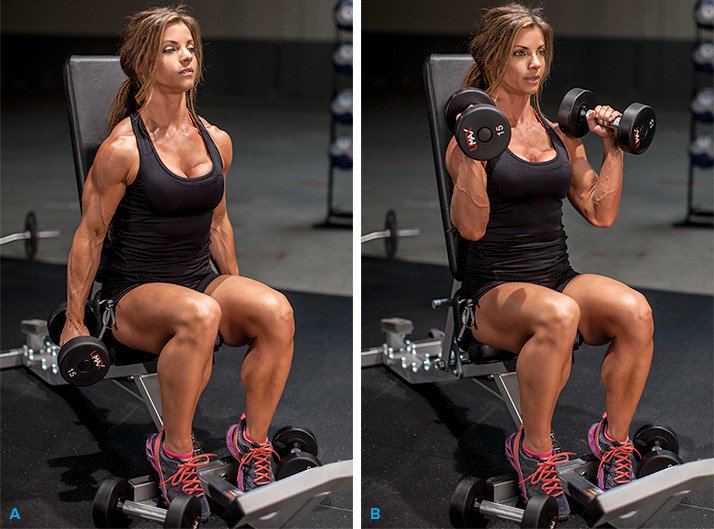
Fitness Tip Tuesday – Reverse Preacher Curl for Muscle Building

Original article and pictures take www.flaviliciousfitness.com site
Workout Schedule for Women Trying to Gain Weight & Muscle

Workout Schedule for Women Trying to Gain Weight & Muscle

Although women naturally have less muscle-building hormone than men, they can still build significant muscle mass and gain weight by following an appropriate workout program. How much muscle a woman can put on is dependent on her genetics. A workout that will help a woman put on muscle is one that features numerous exercises that consist of multiple sets of higher than normal repetitions. Each workout should consist of primarily compound exercises, which means they require movement at more than one joint, as according to the American Council on Exercise, is more effective at building muscle.


Work your chest, shoulders and triceps on Mondays and Thursdays and your back, biceps and legs on Tuesdays and Fridays. Splitting up the workouts into separate muscle groups allows women more time dedicated to each muscle group. This schedule still allows 72 hours of rest for your muscles so they can fully recover.


Perform three to five sets of six to 12 reps of each exercise. Take just 30 to 90 seconds in between sets. This short rest period facilitates muscle building.


Complete bench presses, incline chest presses, pushups, shoulder presses and bench dips on your chest, shoulders and triceps workout. Each of these exercises is a compound, multi-joint activity. The bench press, incline chest press and pushups focus on the chest, but also work your shoulders and triceps. The shoulder press places more emphasis on the shoulders, but also works the triceps, and bench dips focus on the triceps, but also work your shoulders and chest.


Incorporate lat pulldowns, seated rows, bent-over rows, squats, lunges and deadlifts into your back, biceps and leg workout. The lat pulldown, seated row and bent-over row work both your back and biceps muscles. The squat, lunge and deadlift exercises target all the major muscles in the legs, including the glutes, quads, hamstrings and calves.


Select an amount of weight to make each set challenging. Women should use a weight that allows them to do six reps, but no more than 12 reps of an exercise. Otherwise, their workout won’t provide enough stress to overload their muscles and promote development.


  • Fuel the muscle-building process by consuming a meal of lean protein and carbohydrates within 30 minutes after completing each workout. Dr. Joseph A. Chromiak recommends taking in 0.65 to 0.80 grams of protein daily for every pound a women weighs.

Original article and pictures take www.livestrong.com site
среда, 6 декабря 2017 г.

Workout anywhere – Resistance band exercises for the lower body

Workout anywhere – Resistance band exercises for the lower body

are a cheap but very versatile piece of equipment. If you work out at home or travel a lot, you can take these with you in your purse and stay fit anywhere.


As with any other exercise, proper form is key to feel the right muscles activate and get the most benefits from your workout. Unless you are an athlete or fitness professional, workouts and healthy eating should not make up your entire day. Instead, fitness and nutrition are your tool to assist you in fulfilling your daily tasks while staying fit and healthy. Thus, I am all about finding ways to make my workout as effective as possible, in as little time as possible.


Generic 3
At the end of this article, you can download 3 free workouts!

Biomechanics of resistance bands


so effective? Sometimes, doing an exercise with resistance bands can be even harder than doing the same exercise with weight. The reason for this is that the resistance band provides resistance among the full range of motion.


When you are doing an exercise, there is the eccentric part of the motion and the concentric part. During the eccentric part, you are stretching the target muscle, for instance when you are lowering in a squat. Your glutes and hamstrings get stretched, while your quadriceps and hip flexors contract (concentric). As you raise from this position, your glutes and hamstrings contract and shorten, this is the concentric part of the exercise.


Working your muscles through the full range of motion is crucial to build muscle and strength. Especially the eccentric part of the motion is where most muscle fibers tear. The more we stretch our muscles, the harder it gets for them to fully contract again.


Resistance bands provide a challenge for both parts of the motion, the eccentric and concentric part. This means that your muscles never get to relax!


This is also why you will achieve a burn much faster than with weighted exercises. When you are pulling the weight up in a deadlift, you are able to pause for a second at the top. With resistance bands


, you have to contract your muscles the whole time to protect your joints.


Resistance Band Exercises for the Lower Body


Today, we will start with the lower body. As this part of our body consists of the biggest muscles, it is sometimes hard to get in a great workout bodyweight only, especially if you have been exercising for a while. Thus, resistance bands


come in handy and will provide the challenge you need to burn your muscles.


Fire Hydrants


Fire Hydrants target your outer thighs and gluteus medius. They will help lift you butt and build the

One of my favorite exercises to target the gluteus medius and minimus. Our glute muscle consists of three parts and it is crucial to target all of them to build shape and strength. Make sure to contract your core tight and do this motion slowly. I recommend doing 15 – 20 repetitions of this exercise, preferably at the beginning of your workout or as part of the glute activation routine.


Side Lying Leg Raise


Resistance band exercises to build your lower body: Legs, hamstrings, glutes, quadriceps are the main focus. Build muscle and burn fat at home! @askdeniza

This exercise targets your outer thighs and glutes medius and minimus. Make sure to contract your core tight, keep your back flat and contract your entire leg as you raise it. You can also touch your glutes and outer thighs with your hands to improve mind-muscle connection.


Squat


Banded Squats will target your inner and outer thighs much more than a regular squat. Also, they help activate the glutes.

The Squat with Bands around the knees is an excellent exercise for people with knee-joint problems. Oftentimes, people with knee arthritis have weak outer thigh and glute muscles. This muscular imbalance can cause your knees to cave in during squats and puts pressure on the ligaments. During this exercise, you need to push out your knees as much as you can. Only decend as low as you can hold the contraction in your glutes and core. It is not important how deep your squat is but how much you can feel the muscles activate.


Squat Walk


Banded Squat Walk will burn off your butt, outer and inner thighs!

This is a variation of the exercise above. Here, you will lower into a half-squat and walk around, contracting your core and glutes the whole time. Walk to the side, to the front and back and make sure to shift your weight to the heals. If you would like to increase the challenge, hold weights.


Standing Glute Kickbacks


Resistance band exercises to build your lower body: Legs, hamstrings, glutes, quadriceps are the main focus. Build muscle and burn fat at home! @askdeniza

One of my favorite exercises to target the glutes through a full range of motion. Make sure not to lower your leg completely and keep the contraction. Don’t move your leg with your lower back, only use your glutes.


Stationary Lunge


No picture here, but watch this video by Sohee Lee, demonstrating some banded exercises:


This variations of the stationary lunge teaches your body to use the front leg’s hamstrings and glutes to push up from the bottom of the exercise. You will not be able to take a wide stance here but you will still feel it activate the right muscles.


Deadlift


No picture here, sorry! I will soon include my own videos, once I am healthy again … . But basically, you are performing a regular deadlift with a small band around your knees!


This variation of the deadlift is one of my favorite warm up exercises. During deadlifts, the gluteus maximus and hamstrings are the main muscles working. However, you should still push your knees out to activate the other glute muscles as well. This exercise will improve your deadlift form.


Glute Bridge


Banded Hip Thrusts and Glute Bridges burn out your glutes even more and target your outer and inner thighs as well!

The glute bridge with abductions (moving your legs out and in) is again an excellent exercise for people with knee-joint pain. Keep your core tight and push your knees out the whole time.


Donkey Kicks


You can put the bands above your knees or below them. For some people, it is harder when the band is below the knees, for others they feel the muscles activate more when the band is higher. Make sure to contract your core and really raise your leg as high as you can to reach full range of motion.


Side Clam


Banded side clam raises add resistance and will seriously burn out your butt and outer thighs.

One more exercise to activate your gluteus medius. This exercise is crucial if you suffer from diastasis recti, as most women do, especially after pregnancy. Make sure to only raise your leg with your glutes. It does not matter how high you raise it but how hard you contract the muscle.


Side Lunge


Resistance band exercises to build your lower body: Legs, hamstrings, glutes, quadriceps are the main focus. Build muscle and burn fat at home! @askdeniza

Take one step to the side and go down into a lunge. You may not be able to straighten the other leg like in a traditional side lunge but you will feel the outer thighs, inner thighs and glutes work overload on the working leg.


Back Bow


Put a resistance band around your feet and push them out while performing a back bow, reverse hyperextension or back extensions. This again increases gluteal activation and makes a seemingly easy exercise so much more challenging.


Exercises with Resistance Tubes


to provide extra resistance. You can actually combine these exercises with a resistance band around your knees to further activate the gluteus medius. Always find creative ways to increase the challenge.


For all of these exercises, it is crucial to follow the general guidelines for proper form.


Squats


Resistance band exercises to build your lower body: Legs, hamstrings, glutes, quadriceps are the main focus. Build muscle and burn fat at home! @askdeniza

Deadlift


Resistance band exercises to build your lower body: Legs, hamstrings, glutes, quadriceps are the main focus. Build muscle and burn fat at home! @askdeniza

As with all exercises, proper form is crucial here. Make sure to lower from your hips and contract your latissimus dorsi the whole time. This is the muscle right below your armpits. It will help keep your arms close by your side and keep a flat back. Keep your weight in your heels and lower down until you feel a stretch in your hamstrings, just like with a traditional stiff-legged deadlift. Keep a slight bend in your knees and push your hips forward at the top to squeeze your glutes.


Lunge


Resistance band exercises to build your lower body: Legs, hamstrings, glutes, quadriceps are the main focus. Build muscle and burn fat at home! @askdeniza

Glute Kickback


Resistance band exercises to build your lower body: Legs, hamstrings, glutes, quadriceps are the main focus. Build muscle and burn fat at home! @askdeniza

You can also perform this exercise standing and attach the band to a chair or your foot. Make sure to complete the movement with your glutes only.


Hamstring Curls


Resistance band exercises to build your lower body: Legs, hamstrings, glutes, quadriceps are the main focus. Build muscle and burn fat at home! @askdeniza

Again, this can be done in a lying position as well. Make sure to contract your hamstrings (back of the thighs). You can even touch them to increase activation.


Single-legged Deadlift


Resistance band exercises to build your lower body: Legs, hamstrings, glutes, quadriceps are the main focus. Build muscle and burn fat at home! @askdeniza

Proper form is crucial here to protect your lower back. Make sure to lower from your hips, not from your back. Contract your glutes and hamstrings to come up again and push your hips forward and squeeze your glutes and abs at the top. Keep your weight in your heels to decrease activation of your calves.


I hope you liked these exercises! There are a lot more and I will soon film a video of come creative exercises I think I came up with. For now, I hope these explanations and pictures are enough to provide new challenges for your workouts.


Curious to see workouts consisting of the exercises above?


Get access to my library with free workouts, training plans, free meal plan to reverse Insulin Resistance and my Guide to Weight Loss!


If you liked this article and the freebies, please share it and leave me a comment below.


xoxo


Link-ups:


2


Related


Training with Resistance Bands - The complete guide

The Complete Guide to Resistance Band Exercises - Upper Body Edition

Strength training is fun! - Part 2

Original article and pictures take i0.wp.com site
вторник, 5 декабря 2017 г.

Work Your Entire Body With This Supercharged TRX Workout

Work Your Entire Body With This Supercharged TRX Workout

This article originally appeared in the April 2016 issue of SELF.


TRX straps are everywhere, from your gym to boutique fitness studios. Why they're so popular: Slipping your hands or feet into the handles amps up the toning power of simple body-weight strength moves. Despite their prevalence and payoff potential, maybe you're wondering how to use this training tool. We've got you covered: Do this routine of powerhouse basics to perfect your technique while you zing every muscle.


Your Trainer: Shauna Harrison, Ph.D., an Under Armour athlete in the San Francisco Bay Area


You'll Need: a TRX suspension training system. Find one at your gym, or anchor the at-home version to a door or strong pole ($200; TRXTraining.com).


Do: three sets of 10 to 12 reps of each move in order, two or three times a week. Set up the straps as noted for each move; adjust them as needed so you can do the move comfortably.


Squat — do 10-12 reps

Squat — do 10-12 reps

*Works glutes, legs *

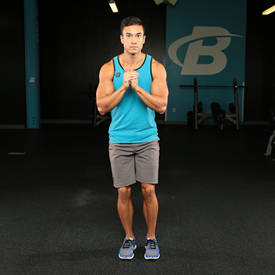
Set straps at midlength. Stand facing the anchor with your feet shoulder-width apart, a handle in each hand at your chest with your elbows bent. Straighten your arms slightly as you lower into a squat, then stand for 1 rep.


Original article and pictures take www.self.com site
понедельник, 4 декабря 2017 г.

Work Out With Weights

Work Out With Weights
Image Source: POPSUGAR Photography

← Use Arrows Keys →


The secret to melting pounds is a strong foundation, and the best way to build muscle is with weights. "When you're doing weight training, it's not so much about burning calories; it's about gaining as much muscle as possible," explains trainer Tia Falcone, who helped 2014 Miss America Nina Davuluri lose over 50 pounds. "All women need to gain as much muscle as humanly possible; that’s what’s going to make you smaller, and it raises your base metabolism permanently." Don't worry about weight training bulking you up — in fact, picking up a pair of hefty weights will actually slim you down faster than forgoing the weight room altogether.


Original article and pictures take media1.popsugar-assets.com site
пятница, 1 декабря 2017 г.

Women's Summer Muscle-Building Plan!

Women's Summer Muscle-Building Plan!

Want to turn heads this summer? Cover model and highly sought fitness coach Jen Jewell has you covered with her game plan for building a show-stopping physique! Rather than focusing on dropping weight—a common trend among the bikini-clad crowd—she suggest you focus on building muscle to achieve your dream physique.


Muscle adds attractive curves to all the right places, giving you the fit look you desire. The increased muscle mass also revs up your metabolic rate, helping to burn any excess fat you may have in the process. The end result? A complete summer makeover!


Get to work on your desired beach body with Jewell's top muscle-building tips and workouts!


1


While you might think the first change you should make has to do with pumping iron in the gym, that's not the case. When it comes to putting on lean mass, nutrition is everything.


"Embrace carbs and protein!" Jen explains. "More often than not, I hear about women skimping on carbs because they think adding too many of them will cause a sudden surge in body fat." It's time to bust that myth. Sure, overdoing anything isn't good, but carbs in moderation are OK—heck, they're even essential.


A big believer in simple, sustainable steps, Jen recommends you focus on including sufficient carbs and protein in your post-workout meal, since it aids recovery and muscle building the most.


A photo posted by Jen Jewell (@fitnessjewell) on Apr 10, 2015 at 9:22pm PDT


Carbs are important for performance, and protein is important for muscle growth. And no, supplementing with shakes won't make you bulky. So, how much should you aim for?


"As far as protein goes, I go for 1-1.5 grams of protein per pound of body weight each day," Jen says. Aim for roughly 25 grams of protein after your workout, and spread the balance across your other meals.


Your overall carbohydrate and dietary fat intake will vary based on your total energy needs, exercise intensity, and exercise duration, but it's safe to aim for 30-50 grams of carbohydrates after your workouts to replenish your energy and jump-start recovery.


What's the best thing to eat before a sweat session? For your pre-workout meal, Jen recommends sticking with foods that are low in fat and contain easily digestible carbs—meaning carbs low in fiber. They'll provide a fast source of energy for the session at hand.


Jen also opts for a high-glycemic carb post-workout to help quickly replenish muscle glycogen (stored energy) levels. Some options include rice, bread, potatoes, and fruit. Have a sweet tooth? Fat-free candy like pixie sticks and gummy bears are another great option! Pair your carbs with a fast-digesting protein like Cellucor COR-Performance Whey for optimal results.


2


"In order to build muscle, you're going to have to challenge your body and stimulate your muscle fibers in a new way," Jen says. "Kick those light weights to the curb, and get ready to really work it!"


Too many women coast through their workout routines and do the same thing over and over again, which leads to a lack of results. "In order to get results, you need to have a clear-cut plan of action each time you hit the gym," says Jen. "This means changing your weight, rep scheme, or exercises in order to keep stimulating the body."


"In order to get results, you need to have a clear-cut plan of action each time you hit the gym," says Jen.

One of Jen's favorite muscle-building techniques is the dropset, a technique where you choose a weight, do reps to failure, and then immediately continue with a lighter weight. You can drop multiple times for an increased effect. "Dropsets are my favorite way to build muscle or help bring up a lagging muscle group or body part," Jen adds.
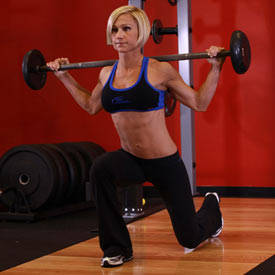
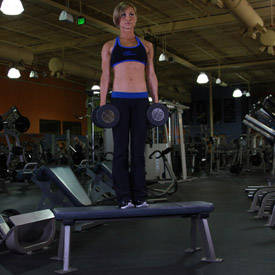

As Jen explains, dropsets work so well because, in a given set, you are only recruiting a certain percentage of the muscle fibers. But when you do one full set at a higher weight, strip the weight down, and immediately pick up a lighter weight, you recruit untapped fibers. This creates more stimulus and encourages new growth. It also burns a lot of calories!


"Whatever rep range I'm using, I always focus on pushing my reps to failure," Jen emphasizes.


3


Going hard in the gym seven days a week doesn't lead to exponential gains. To build maximum muscle, you must take rest seriously. You actually tear your muscles down while in the gym. In order for them to properly recover and build, they need to have weekly rest time.


A photo posted by Jen Jewell (@fitnessjewell) on Feb 3, 2015 at 6:20pm PST


"I always take at least one day of full rest from my workouts each week," Jen says. "This means no weights or cardio. Sometimes it'll be an active rest day and I'll do a yoga class, but I definitely make sure to allow my body enough time to recover from lifting."


Recovery can also be aided by what you eat. "Proper supplementation and nutrition are key as well," Jen says. "During or at the end of every workout, I take Cellucor Alpha Amino. The amino acids in this product help not only with recovery, but growth as well."


4


You may have a picturesque physique in mind, but your overall health is always important. "In an effort to achieve optimal health, cardio should be done year round," Jen says. "Including cardio as a key component to your workouts is essential in order to stay at a healthy, lean level while adding muscle."


All too often, Jen says she sees people make the mistake of cutting cardio out completely during a muscle-building cycle. Ultimately, she says, this means putting on too much fat mass and then having to "cut" that off. Over time, this cycle can lead to a repetitive loss of hard-earned muscle and very small net gains.


"Bulking/cutting is a vicious cycle that I see many competitors go through, and it's not the best way to make overall improvements to your physique," Jen states. "If you can maintain a healthy level of body fat the entire year, adding muscle—and being able to hold on to your muscle—is definitely doable."


Jewell recommends that you opt for high-intensity interval training (HIIT) rather than steady-state cardio training. HIIT workouts are based on alternating intervals of all-out work and slower, recovery work. For example, you can sprint on the treadmill or outdoors for 15-20 seconds, walk for 40-45 seconds, and then repeat.


"Adding these more intense bouts of exercise combined with brief stints of recovery can help aid fat loss while helping preserve hard-earned muscle," Jen says. For optimal benefits, she recommends 3-4 sessions of 20 minute each per week.


5


Nearly everyone struggles with lagging motivation occasionally. As the summer weather starts to heat up, it's not abnormal at all to find yourself wanting to forgo the gym to soak in some sun.


Jen has an easy solution for this: "Skip the gym!" Staying out of the gym doesn't mean skipping out on your workout; it just means embracing the outdoors. "I take my workouts outdoors whenever I can," Jen says. "I'm all about having fun with fitness."


"Don't be afraid to take a day off from the weights and head out into the local park, track, or beach to mix up your usual routine," she adds.


Staying out of the gym doesn't mean skipping out on your workout; it just means embracing the outdoors.

While you might not be able to do quite everything outside that you'd do in a brick-and-mortar gym, you can certainly do a lot to keep your muscles stimulated. Bodyweight exercises, sprints, or resistance-band work in the park will all transform your body and keep your muscles stimulated sans weight-room equipment.


As with all fitness endeavors, variation is key with outdoor workouts in order to prevent a progress plateau. "Aside from bodyweight exercises, try doing cardio by running the stairs or sprinting on the track, or grab some friends for a game of volleyball or softball," Jen suggests.


Now that you know Jewell's top tips for muscle-building success, it's time to dive into her workout. With this workout, you'll have two days off per week. Add them into the program wherever they fit best with your schedule—preferably one midweek and another on the weekend.


Note: the dropsets should only be implemented occassionally—not every workout. When you don't do a dropset, perform a regular set.


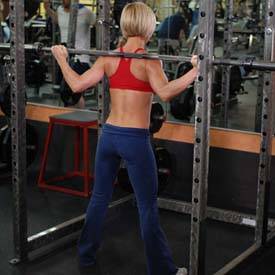
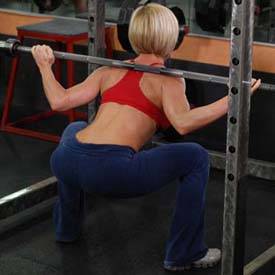
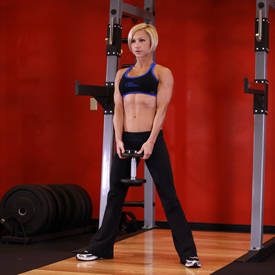
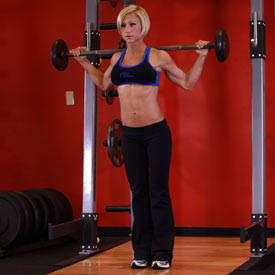
Wide Stance Barbell Squat
Single-leg deadlift

Wide Stance Barbell Squat

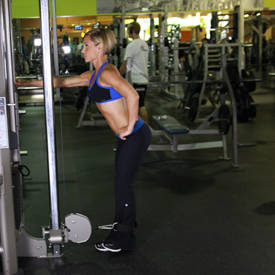
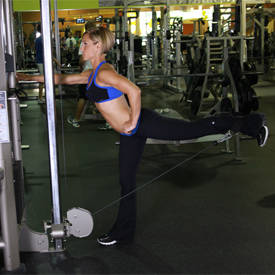
Glute cable kick-back
Plie squat

Glute cable kick-back

Plie squat

Reverse barbell lunge
Step-up to kick-back

Reverse barbell lunge

Step-up to kick-back
Exercise note: Perform a step-up as you normally would, then perform a kick-back with the other leg. Squeeze your glute.

Walking lunge with kick-back in between lunge
Exercise note: Kick your back leg up and squeeze your working glute.

Side lunge

Wide-Grip Lat Pulldown
Overhead triceps rope extension

Original article and pictures take www.bodybuilding.com site

среда, 29 ноября 2017 г.

Wide-Grip Lat Pulldown (Fitness Tip Tuesday)

Wide-Grip Lat Pulldown (Fitness Tip Tuesday)
back-exercises-for-women

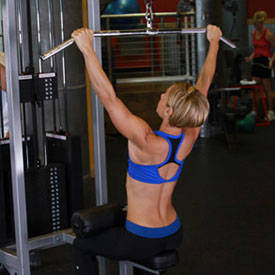
Wide-Grip Lat Pulldown


How To: Kneel with legs shoulder-width apart. Pull your shoulders down and back. Keep your chest up and core tight. Your torso should remain in nearly the same position from start to finish.


Muscles Used: Lats, Biceps, Shoulders, Mid Back.


Original article and pictures take www.flaviliciousfitness.com site

понедельник, 27 ноября 2017 г.

Why You Aren't Gaining Muscle (and What to Do About It)

Why You Aren't Gaining Muscle (and What to Do About It)
Shutterstock

That fitness expert on Instagram with glutes that seem to defy gravity can make you wonder, "How does she do that?!" It's true, everyone's body is built differently and doesn't put on muscle the same way. By learning more about your muscles, you'll discover the best way to get that lifted booty.


1. Muscle Can Maintain Your Weight


Functionally, muscles protect your bones, organs, and tissues—and even help you heal quickly. Kathryn Sansone, a certified fitness trainer and the founder of GreekGirl Beauty Protein, adds that muscles can also be important to maintain your weight. "Muscle requires more energy and therefore burns more calories than fat," she says. "The more muscle mass you have, the faster your metabolism is." More muscle means burning more at rest, plus being able to work harder during your workouts. Double-win.


2. It Can Also Cause Gains, So Don't Panic


Women might worry when they see the number on the scale go up. "A pound is a pound no matter what, but the volume of one pound of muscle is much smaller than one pound of fat," says Jacklyn Sklaver, NASM personal trainer and CISSN sports nutritionist. Instead, measure your waist, your hips, and your body fat percentage to keep track of your physical progress.


3. Strength-Train for Optimal Results


Sklaver recommends women strength-train four times a week to see results. "Some women can stick to only weight training with no cardio," she explains. "Others may need to do cardio 30 minutes a day three to five times a week for the best results." Sklaver adds that it's also beneficial to add compound movements (total-body exercises) to burn more calories. "Full-body workouts are ideal for maximum muscle growth," she says. "The more a body part is used, the more hypertrophy that occurs." Focus on working the largest muscle groups in the body: the glutes, quads, and hamstrings. Training the upper body in conjunction helps create an hourglass shape. You can cut back on that treadmill time, too—Sklaver says too much cardio can lead to difficulty gaining muscle.


4. "Bulking Up" Is Rarely a Thing


Don't be afraid that you'll come out of the weight room looking like John Cena. "Women who are 'bulky' are following a nutritional plan, have been working out for many many years, and may have goals of increasing strength rather than body composition," says Sklaver. It takes A LOT more effort to gain muscle than to gain or lose fat. Meaning if you lift weights, you won't become huge right away. If you are prone to bulking up, Sklaver advises focusing on your nutrition. "Find a daily caloric and macronutrient intake, meal prep, and eat for performance and recovery."


5. Men Build It More Easily Than Women


Our male counterparts produce more testosterone—the hormone responsible for growth, and are also genetically built to have bigger muscle fibers, which helps them gain more mass. Women produce more estrogen, which means our bodies naturally carry more body fat than lean muscle. Body type and genetics can also play a role in that body composition, but fortunately so can nutrition.


6. Your Diet Plays a Major Part


"Muscle requires the right amount of nutrients to grow. That includes protein, carbs, and fat," says Lisa Avellino, director of fitness at NY Health & Wellness. She suggests keeping a training and food diary to minimize guesswork and measure your results. Sklaver agrees with Avellino and adds that starving yourself and not eating enough protein can keep you from seeing results. "Muscles are made of protein, so they need protein to grow," Sklaver says. "Complete proteins are any lean animal source, dairy, eggs, fish, and some protein powders." For vegetarians, opt for quinoa, buckwheat, or soybeans, or combine nuts with whole grains to make a complete protein. Many plant-based foods are incomplete proteins, making it harder for the body to absorb enough nutrients. "A good rule of thumb is that you have to eat 30 percent more of an incomplete protein to equal the same benefit of a complete protein source," she explains.


7. Check for Underlying Health Conditions


Sometimes your inability to put on muscle could have to do with health conditions you may not be aware of. Sklaver says it's important to find out if you have any conditions that may affect your metabolism, endocrine system, or thyroid. You should also make sure you're getting enough sleep to cut your recovery time. According to Avellino, our human growth hormone (HGH) levels are highest when we are asleep. "Many studies suggest an association between a lack of sleep and high cortisol levels," she explains. "Cortisol is a catabolic hormone that is linked with stress and can break down muscle tissue." Building muscle and reducing stress go hand in hand.


Original article and pictures take www.fitnessmagazine.com site